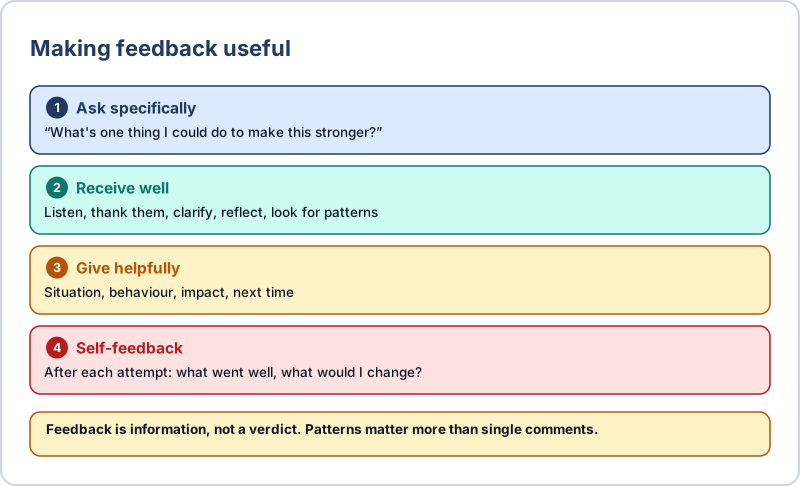
Feedback is information about how your actions land. Without it, you can practise the same mistakes for years. With it, you can improve much faster. The challenge is that feedback often stings, so many people avoid it.
Ask for feedback the right way
General questions like “Any feedback?” usually get polite, vague answers. Ask specific, forward-looking questions instead:
- “What’s one thing I could do to make my next presentation stronger?”
- “What should I keep doing, and what should I change?”
- “If you were in my position, what would you focus on?”
Asking for “one thing” makes it easier for people to be honest.
Receive feedback well
- Listen and thank them. Resist the urge to defend or explain.
- Ask a clarifying question. “Can you give me an example?”
- Take time to reflect. You don’t have to agree or decide straight away.
- Look for patterns. One comment might be one person’s view. The same comment from three people is worth acting on.
Separate the message from the delivery. Even clumsy feedback can contain something useful.
Give feedback that helps
A simple structure: situation, behaviour, impact, next time. “In yesterday’s meeting (situation), you interrupted Sam twice (behaviour). He stopped contributing (impact). Next time, could you let him finish first (next time)?” Describe what you saw, not your judgement of the person, and offer it privately and promptly.
Build your own feedback loops
Not all feedback needs to come from others. Track results, record yourself, review your work against examples you admire and ask after each attempt: “What went well? What would I do differently?”
Try this: a feedback experiment
Choose two people whose judgement you trust. Ask each one a specific “one thing” question about a skill you’re developing. Write down what they say, thank them, and choose one change to try. Report back to them on how it went.
Workbook: complete Worksheet 9, “Feedback Experiment”, in your Success Principles workbook.