Almost every meaningful goal involves setbacks: plans that don’t work, rejections, slow progress and unexpected obstacles. Persistence is the ability to keep going. But persistence alone isn’t enough; you also need to know when to change your approach.
Persist on the goal, flex on the method
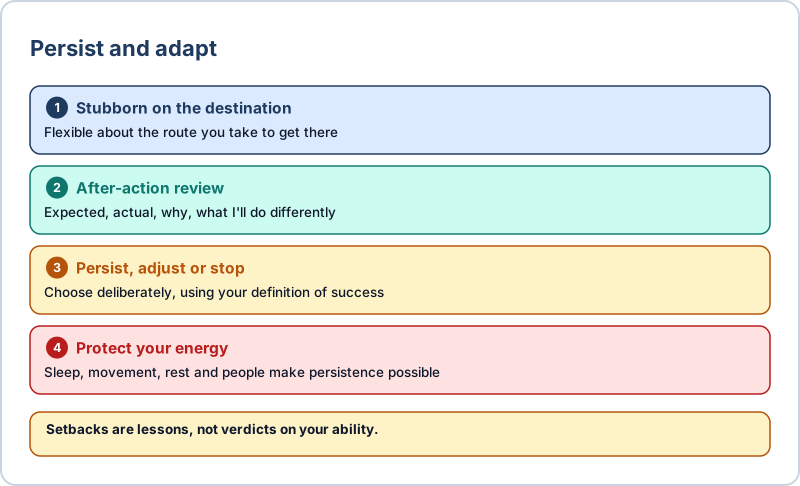
A useful rule: be stubborn about the destination and flexible about the route. If one approach isn’t working after a fair trial, that doesn’t mean the goal is wrong. It may mean the method needs to change.
The after-action review
After a setback, or at the end of any project, ask four questions:
- What did I expect to happen?
- What actually happened?
- Why was there a difference?
- What will I do differently next time?
These questions turn setbacks into lessons rather than verdicts on your ability.
Adjust, persist or stop?
When progress stalls, consider three options:
- Persist: the approach is sound, it just needs more time or repetitions.
- Adjust: the goal is right, but the method, timeline or resources need to change.
- Stop: the goal no longer fits your definition of success, or the cost now outweighs the benefit. Stopping a goal on purpose is a decision, not a failure.
Return to your definition of success and your “why” from Module 1 to help you choose.
Look after your energy
Persistence depends on energy. Sleep, movement, rest and time with people you care about aren’t distractions from success; they’re what make sustained effort possible. Plan recovery as deliberately as you plan work.
Track progress, not just results
When results are slow, it’s easy to feel you’re getting nowhere. Keep a simple progress log: skills practised, actions taken, lessons learned. Looking back over a month often shows more progress than you realised.
Try this: review a setback
Pick a recent setback. Work through the four after-action questions. Decide whether to persist, adjust or stop, and write one specific next step. Then use the Success Skills Checklist at the back of your workbook to choose the skills you’ll build next.
Workbook: complete Worksheet 12, “Setback Review”, in your Success Principles workbook.